
Check AC Voltage with Multimeter: The Practical 2026 Guide to Safe Readings on Indian 230 V Mains, Range Settings, Probe Placement and the Common Mistakes That Blow Fuses or Shock You
Set the right AC range, probe a socket safely and read 230 V correctly, plus the mistakes that blow meter fuses or shock you.
Quick answer
To check AC voltage with multimeter, turn the dial to V~, pick a range above 230 V and plug the leads into COM and V. Probe live and neutral, and a healthy Indian socket reads about 230 V.
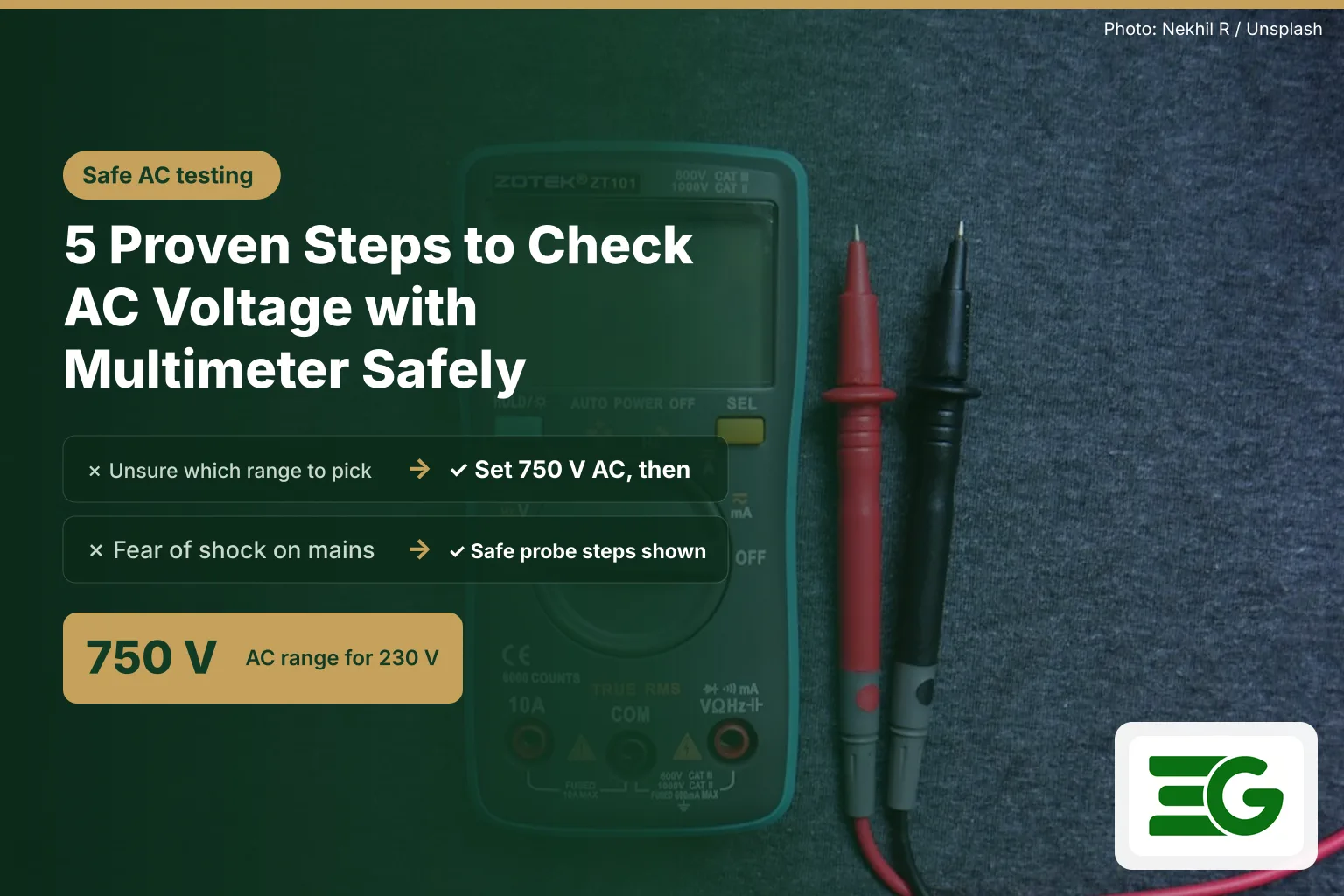
- ✗ Unsure which range to pick → ✓ Set 750 V AC, then read
- ✗ Fear of shock on mains → ✓ Safe probe steps shown
| Meter AC range | Use for 230 V | Why |
|---|---|---|
| 200 V AC | No | Overloads at 230 V |
| 600 V AC | Yes | Covers mains with margin |
| 750 V AC | Yes | Common top range in India |
Introduction
Check AC voltage with multimeter in under a minute, and you get a number you can trust. Get the range or the probes wrong and you blow a meter fuse or get a shock. That is why this guide starts with the setup, not the theory.
On Indian mains you should read about 230 V between live and neutral. Mains electricity in India runs at 230 V and 50 Hz, and a reading far from that tells you something is wrong: a loose connection, a weak supply or a meter set to the wrong range.
If you only remember one rule, set the AC range above the voltage you expect, then probe. Everything below follows from that.
Check AC voltage with multimeter: what you need first
You need three things: a digital multimeter with a V~ (AC voltage) position, insulated test leads in good condition, and a meter rated for mains work. Look for a CAT III or CAT IV label on the meter. If you can't reach the terminals easily, a clamp multimeter such as the check ac voltage with multimeter model is worth a look.
Pick a meter with a 750 V AC range
Most Indian digital multimeters offer AC ranges of 200 V, 600 V or 750 V. A 200 V range is too low for mains: it reads only up to 199 V, so a 230 V socket overloads it. A 600 V range covers mains with room to spare, and 750 V is the common top AC range on Indian meters. We'd pick 750 V on a general-purpose meter, because it means you never have to think about the range for a socket.
Check AC power with multimeter on a wall socket
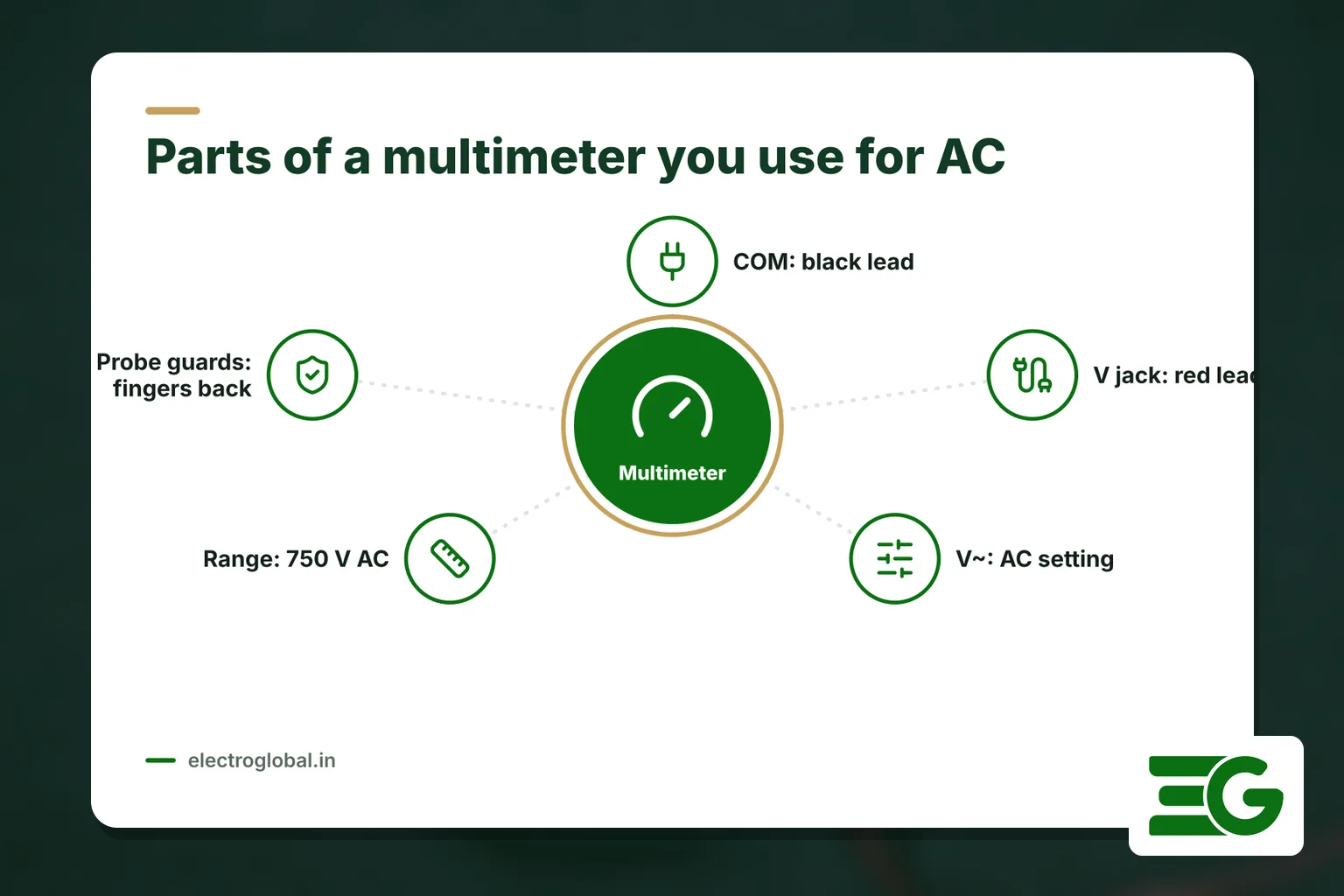
For a plain wall socket, a handheld meter does the job. A model such as the check ac power with multimeter option is a practical starting point, and any meter with a proper V~ range works the same way. Keep your fingers behind the probe guards the whole time.
Probes, jacks and fuses
The black lead always goes into COM. For voltage, the red lead goes into the V and ohm jack. Never put either lead in the 10 A jack when you measure voltage. That jack is for current, and plugging a live supply into it while the dial sits on a voltage range can blow the internal fuse or damage the meter. Check the fuse rating printed on the meter's back before you start.
How to measure AC voltage step by step
This is the process we follow on the bench. Our how to measure ac voltage guide covers the difference between AC and DC readings if you want the theory behind it.
AC voltage testing steps
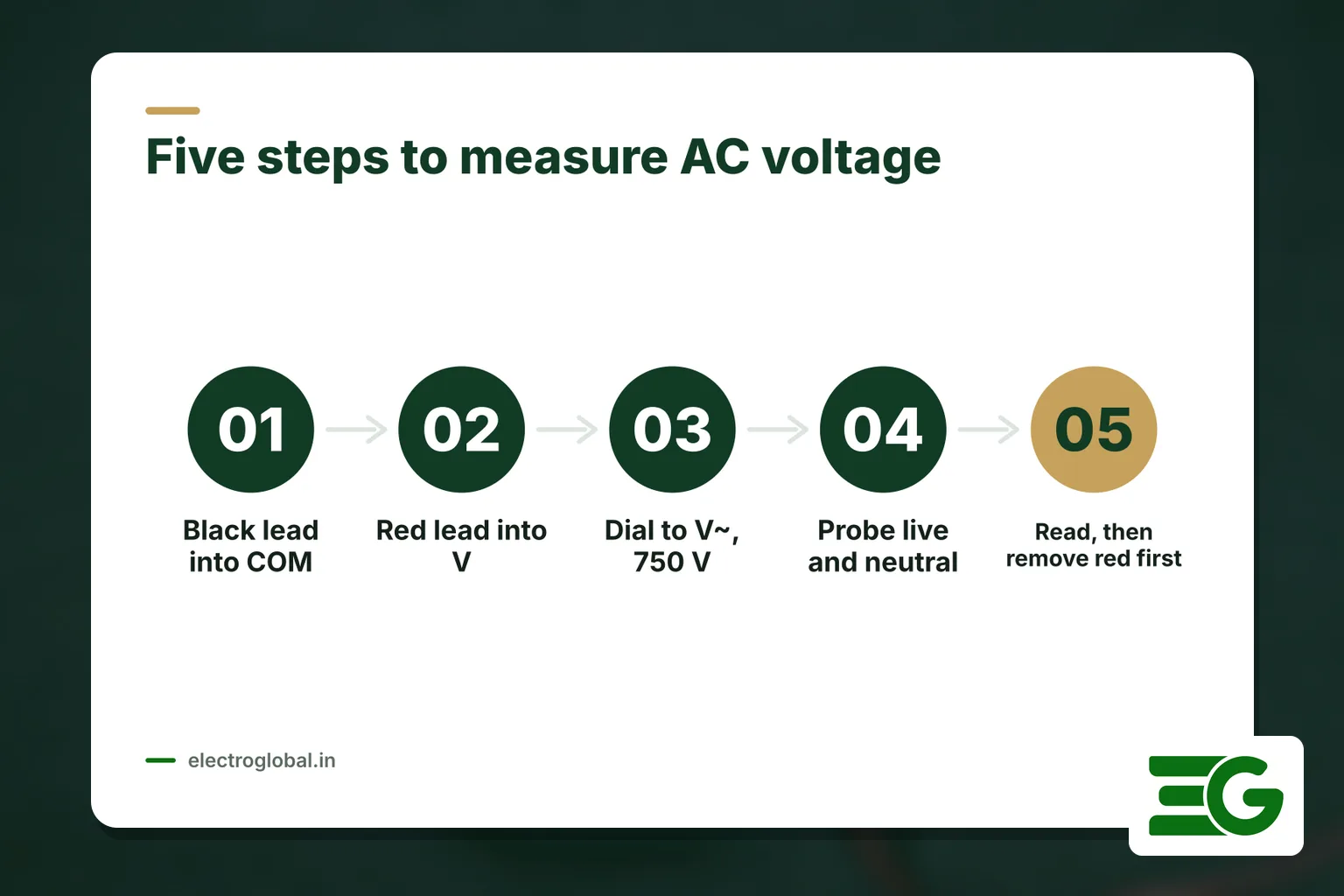
- Plug the black lead into COM and the red lead into V.
- Turn the dial to V~ and pick a range above 230 V, such as 750 V. If you don't know the voltage, start at the highest range. Most meters autorange, but check the display.
- Stand on a dry floor with dry hands, and hold each probe by its insulated part only.
- Touch the black probe to neutral and the red probe to live. The meter reads the difference between the two points.
- Read the display and note the number. Then remove the red lead first and the black lead second.
Multimeter AC voltage settings for mains
On the dial, look for a V with a wavy line or V~. Don't use the DC position for a socket: a DC setting gives a meaningless reading on AC. An auto mode picks the range for you, which is convenient, but a manual range teaches you more because you see what the meter is doing. Some cheap meters don't autorange at all, so check the manual.
Measuring 220V AC with multimeter: range and readings
Older labels say 220 V and newer ones say 230 V. Both describe the same mains supply, and a reading anywhere in that band is normal. A 750 V range shows it without overloading the meter, whichever label you're working from.
The meter shows RMS, the value that matters for heating loads and wiring checks. The peak is higher: a 230 V RMS supply peaks at about 325 V (230 times the square root of 2). You won't see that peak on a digital meter, and that's expected, so don't read it as a fault.
Non-true-RMS meters can misread distorted waveforms, such as the output of a cheap inverter or a UPS running on battery. If you measure those, use a true RMS meter, or the number on the display won't match the supply.
Check mains voltage with multimeter: expected readings
One socket reading tells you less than comparing three pairs of points. On a healthy single-phase outlet, live to neutral and live to earth both read close to 230 V. Neutral to earth should read a few volts or less. Our check mains voltage with multimeter guide covers the home version of these checks with the same probe pairs.
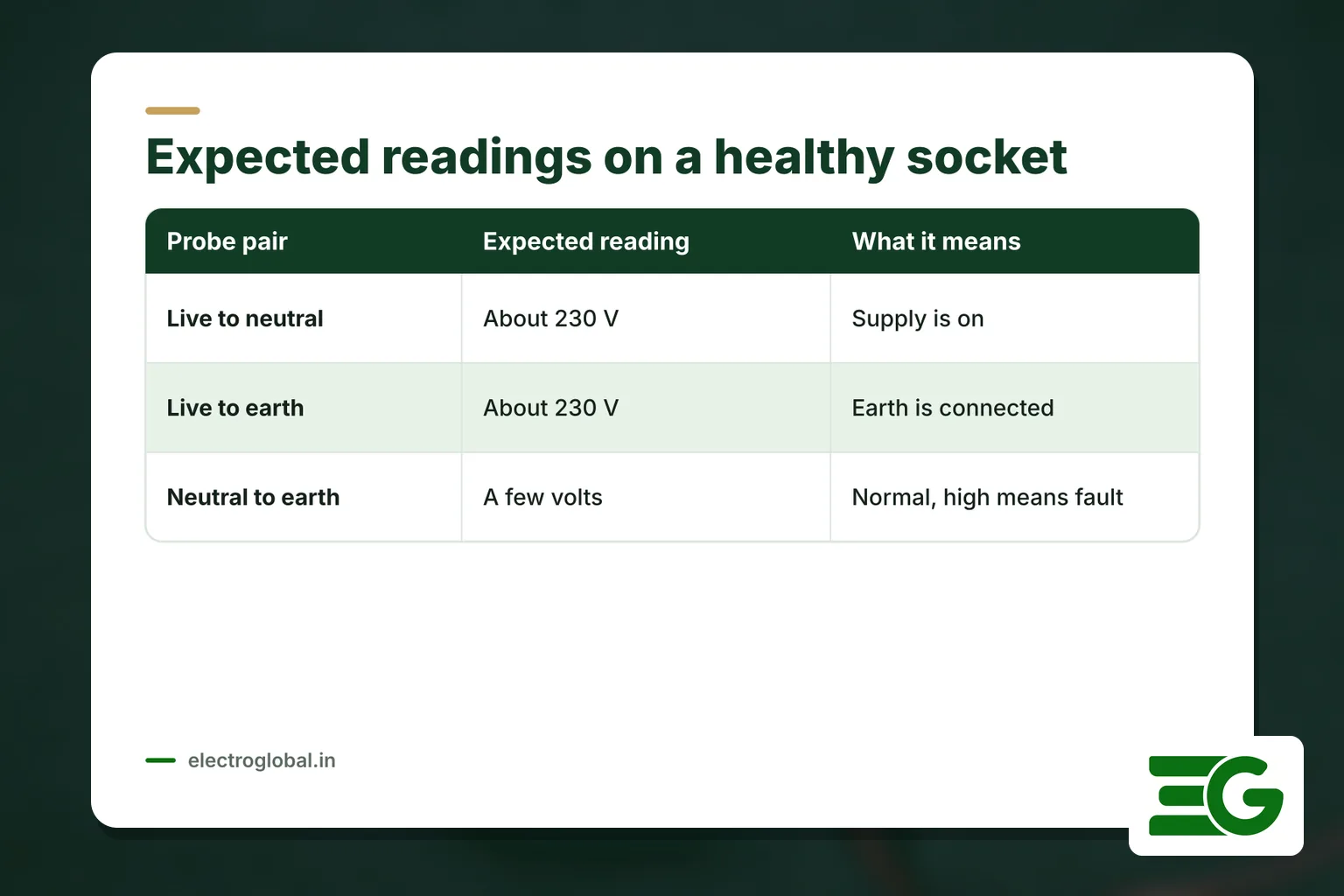
A high neutral to earth reading, when live to neutral and live to earth look normal, points to a wiring fault. Stop there and call an electrician before you plug anything in.
Bench tip: Take the reading with a known load, such as a 60 W bulb, connected. A disconnected wire can show a few volts on a high-impedance meter. A load shows whether the supply is really there.
Check AC voltage on multimeter: probe placement
Probe placement decides the reading. The meter measures the difference between the two points you touch, so one probe on a bare earth stud and the other on a live terminal tells you about that pair, not about the socket. For a socket, the probes go into the live and neutral slots, and the earth slot is a third point to compare against.
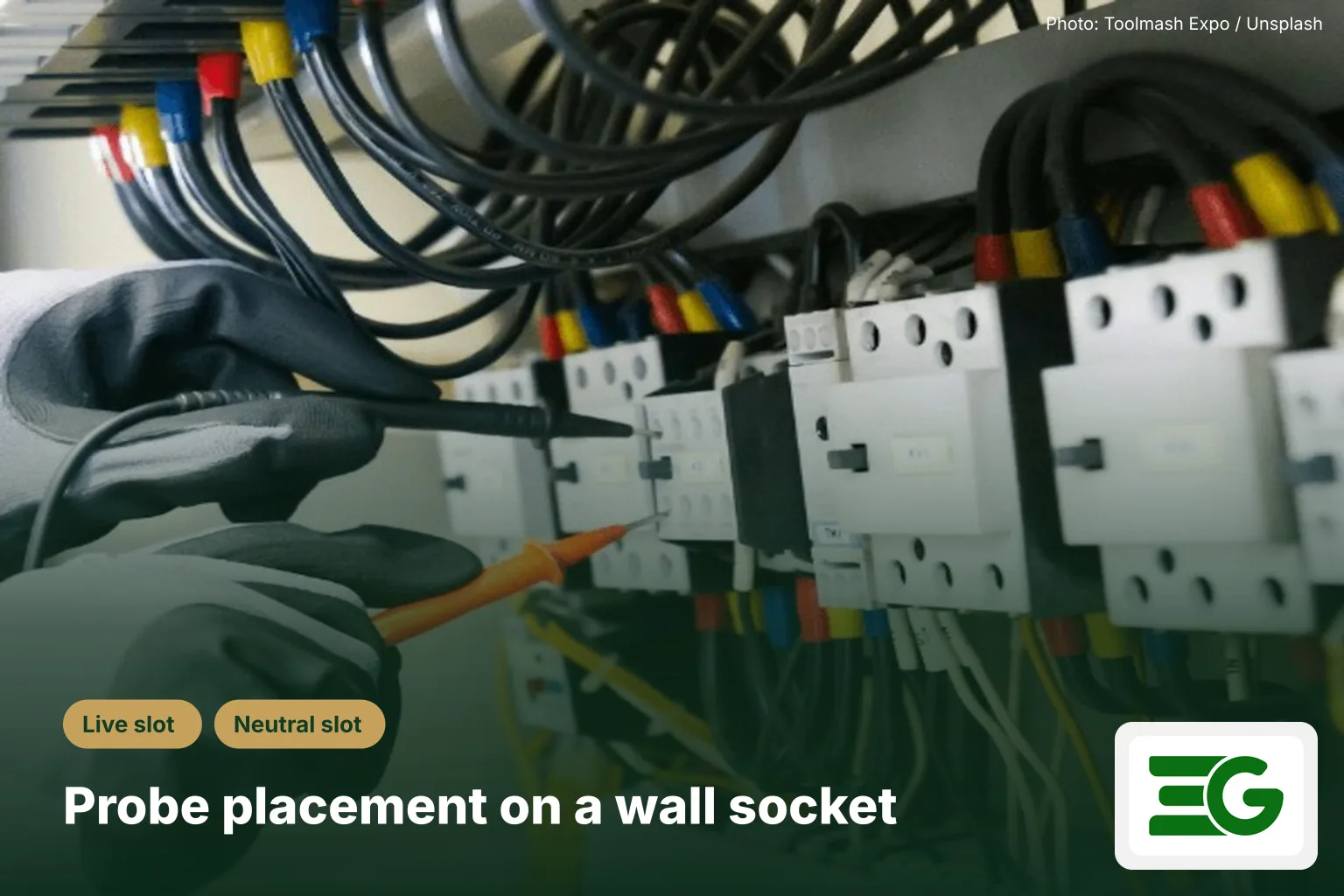
If you're buying, our check ac voltage on multimeter range lists the models we stock, so compare the AC ranges and ratings before you pick one.
Common mistakes that blow fuses or shock you
These come from the forum threads we read and from what goes wrong when people rush the setup.
- Leads left in the 10 A jack while measuring voltage. The meter fuse blows, or the meter gets damaged.
- The dial left on a current or resistance setting. A current range across a live supply is close to a short circuit through the meter.
- A range that is too low, such as 200 V on a 230 V supply. The meter overloads and shows an overload warning.
- Touching one lead to a live wire and standing on the floor to find which wire is live. A Reddit thread asks exactly this question. Don't do it: you complete a path through your body to the supply.
- Trusting a ghost reading. A high-impedance meter can show voltage on a disconnected wire, so test with a load before you act on the number.
If the reading surprises you, stop, check the range and the jacks, then recheck with a load before you decide anything.
Digital multimeter vs non-contact tester
A non-contact tester is quick. Hold it near a wire and it signals when it senses AC. It can tell you that voltage is present, but it can't give you a number, so it can't confirm that a supply is 230 V. A digital multimeter gives you the number, which is what you need when you check a socket, a fuse or a supply under load.
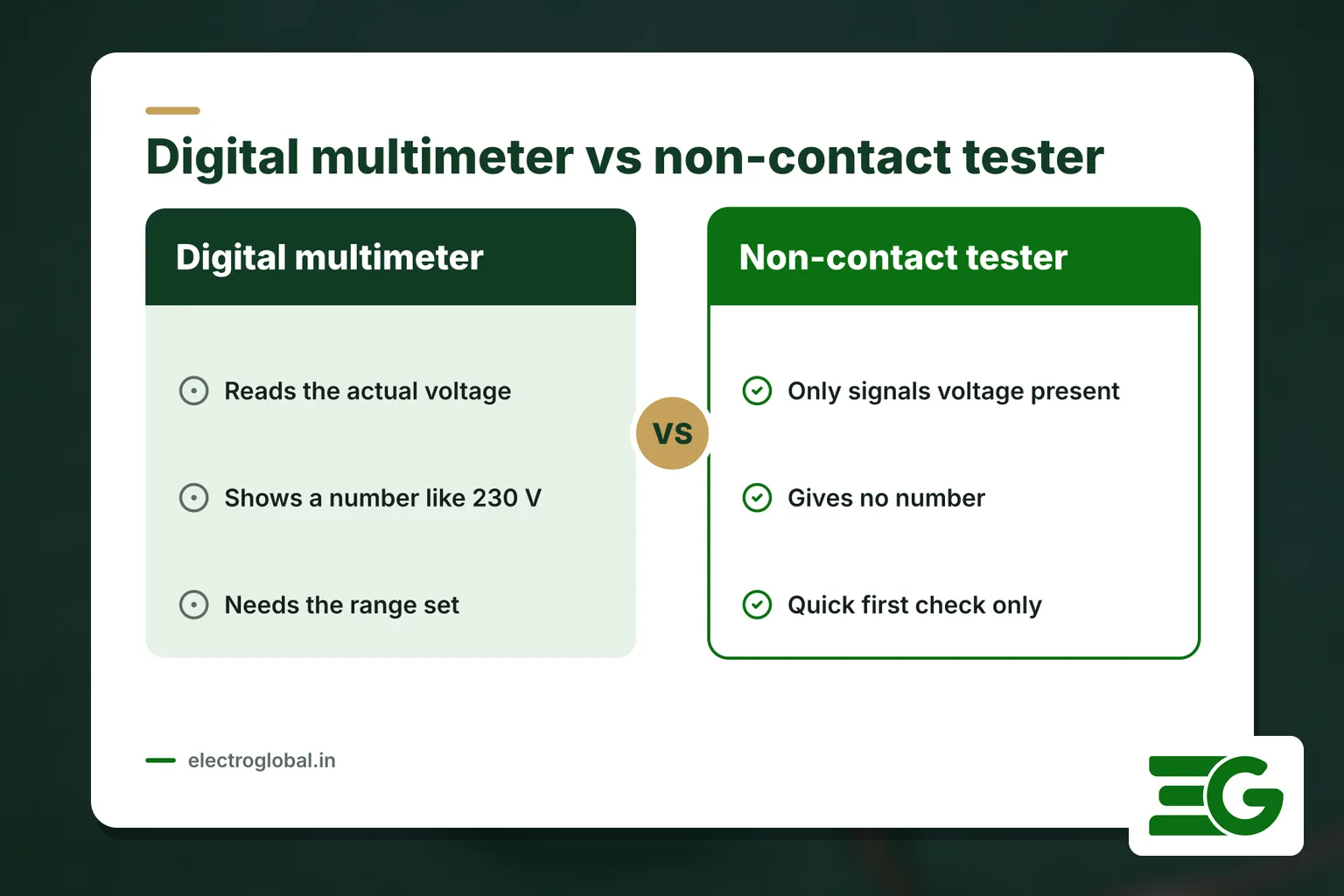
A Reddit thread on this exact question reached the same conclusion: use the non-contact tester for a quick first check, and the multimeter when you need a reliable reading. We agree. If you own both, test the tester on a socket you know is live first, then check the socket with the meter.
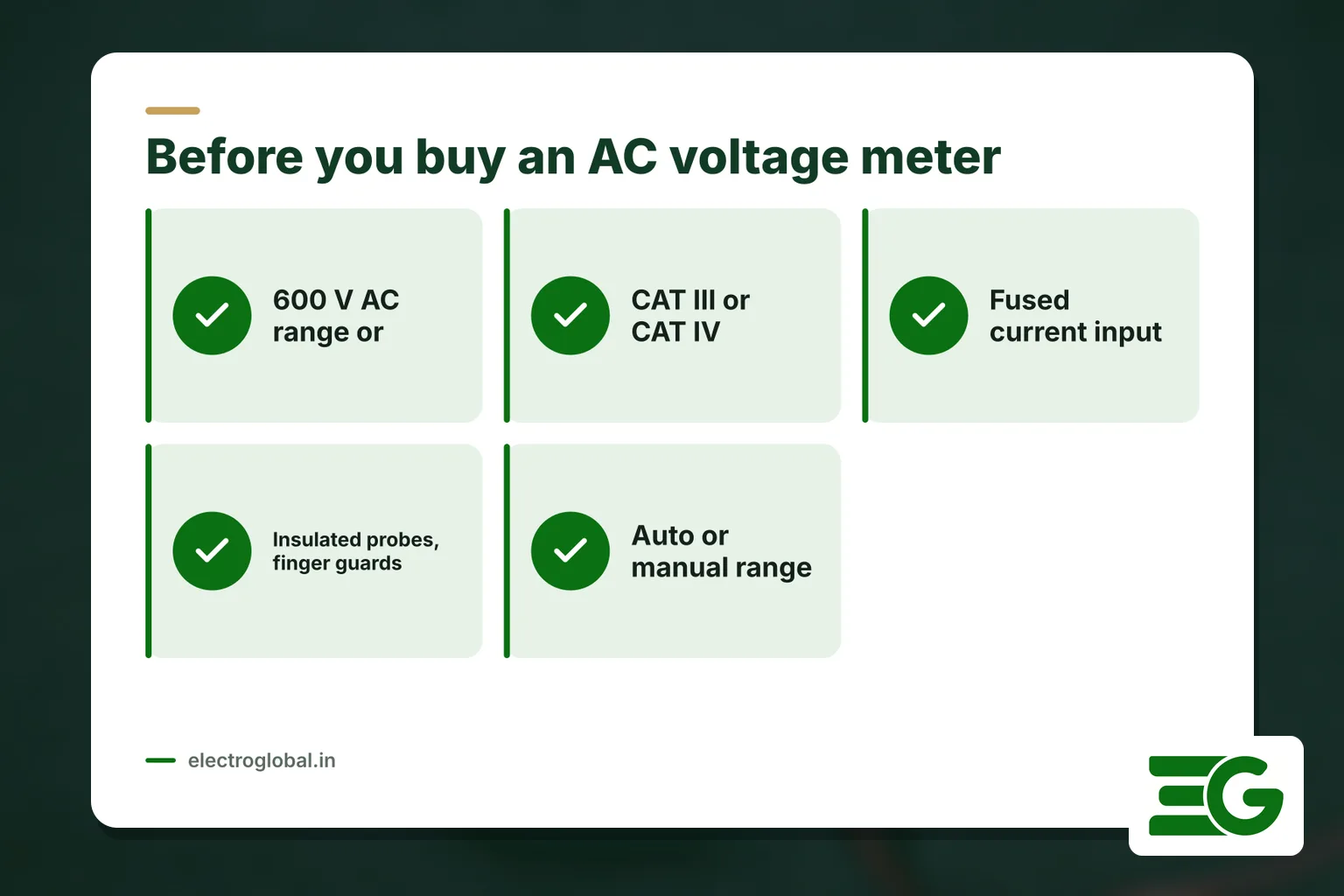
Buying checklist for an AC voltage meter
These five points cover most of the problems in the threads we read.
- An AC range of at least 600 V, so 230 V mains sits well inside it.
- A CAT III or CAT IV rating printed on the meter.
- A fused current input, so a mistake doesn't destroy the meter.
- Insulated probes with finger guards.
- Auto range if you're new, manual range if you want to learn what the meter is doing.
Conclusion: check the range, then probe live and neutral
Set the AC range above 230 V, put the leads in V and COM, and probe live to neutral. A reading near 230 V means the supply is healthy. A reading far from it, or a high neutral to earth reading, means you stop and check the wiring.
Start with a socket you already know is live, so you learn what a normal reading looks like on your own meter before you rely on it for anything else.
Tagged